-
 3/21/26
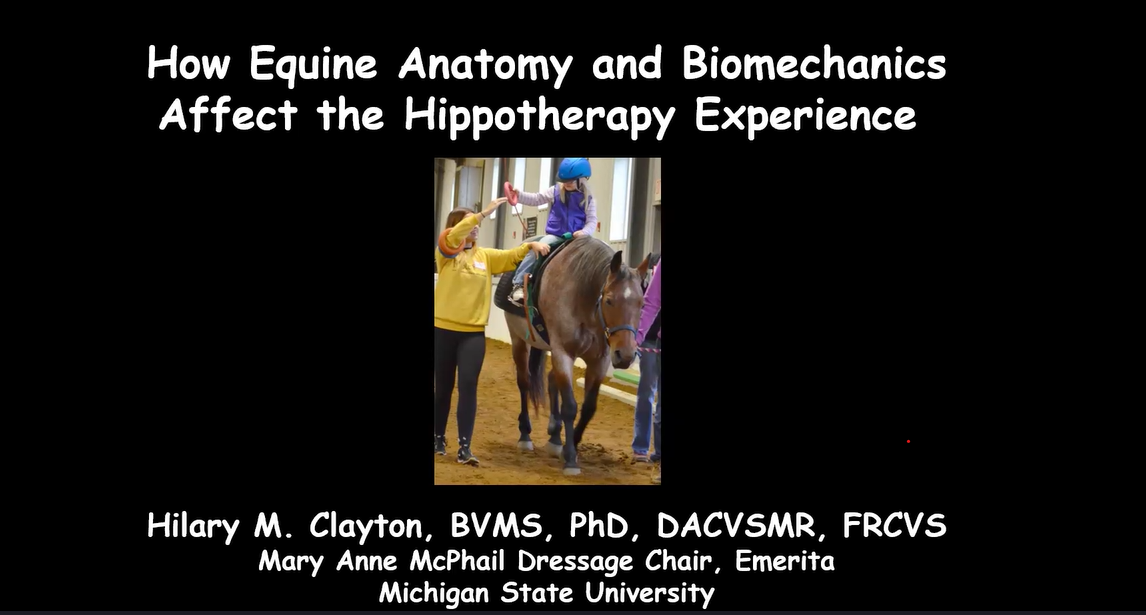
Plenary Presentation - How Equine Anatomy and Biomechanics Affect the Hippotherapy Experience
Presented by Hilary M. Clayton, BVMS, PhD, DACVSMR, FRCVS Professor and McPhail Dressage Chair, Emerita Michigan State University
This presentation focusses on the physical connection between horse and rider during hippotherapy. Horses vary greatly in size, shape and quality of movement; equine anatomical characteristics that affect the rider’s comfort and connection with the horse will be considered first. The forces generated by the horse and transmitted to the rider will be described focusing on the rhythmic three-dimensional movements of the horse’s thoracolumbar spine compared with those of the human pelvis during forwards walking. Muscular activation and core control patterns in able-bodied riders will be described in the context of how deficiencies in muscular activation and strength affect riding.
-
-
 3/20/26
Breakout Session #2 Rewiring Rehabilitation: Upper Extremity, Vagus Nerve and Electrical Stimulation in combination with Hippotherapy
Presented by: Michelle Winer, MS, PT, HPCS
In addition to functional electrical stimulation (FES) and neuromuscular stimulation (NMES), there is also vagus nerve stimulation (VNS). Implanted vagus nerve stimulation is FDA-approved for the treatment of epilepsy and depression and for stroke rehabilitation. Non-invasive vagus nerve stimulation is FDA-approved for migraines. Both implanted and transcutaneous VNS are currently being investigated for many other indications, including: upper extremity impairment post stroke, symptoms of long COVID, cognitive disorders, and more. VNS can be combined with treatment sessions utilizing hippotherapy. This presentation will review the use of FES/NMES for UE function in an adult post-stroke and provide an overview of some of the theoretical basis behind vagus nerve stimulation in stroke rehabilitation, as well as the impact on a patient who is currently using tVNS and potentially receiving an implanted device. -
3/20/26
Breakout Session #4 Effects of Equine and Equine Simulated Interventions on Engagement and Sensory Processing in Children with Autism Spectrum Disorder
Presented by: Heather Panczykowski, DHSC., OTR/L, FAOTA
This pilot study examined the relationship between engagement levels and sensory processing in children with autism while riding a horse and a riding simulator. Strong correlations were found between engagement and sensory processing, highlighting the need for further investigation.
Ultimately, this study contributes to a growing body of evidence supporting individualized, sensory-informed approaches to intervention planning for children with ASD. By understanding how sensory processing influences engagement, clinicians can make more informed decisions about the use of equine-assisted and simulated riding therapies to support functional outcomes.
-
 3/20/26
Breakout Session #5 When Medicine Meets Motion: Orthopedic and Neurological Interventions and Impact on Hippotherapy
Presented by: Michelle Winer, MS, PT, HPCS
Many of our patients are receiving invasive and semi-invasive medical interventions, including hip surgeries, tendon lengthenings, Botox injections, cryo-neurotomy, and others. This presentation will review some of the orthopedic and neurological interventions that our patients receive, as well as the potential impact on our therapy services, focusing specifically on the impact of the incorporation of hippotherapy.
-
 3/20/26
Breakout Session #6 Horses for a Greener Future: What Our Equine Partners Can Teach Us About the Environment
Presented by: Irina Fedlow-Plante, PT, DPT
Horses have provided valuable insight about nature and ecosystems to humans for centuries. They are deeply connected to their environment and constantly attuned to their surroundings through their senses. Interacting with horses and observing their natural behaviors has encouraged humans to become more mindful and present with their emotions and surroundings. As a result, it has created a connection that has fostered a deeper sense of appreciation and serenity for the natural world. Engaging in the natural world has played an important role in the various settings that include our equine partners.
With the fast-growing pace of the world, there has been a disconnect from nature, and many aspects of horsemanship have been impacted. This ranges from land conservation to water quality, building integrity, and more. These factors have made it more challenging to justify horse ownership and develop facilities that integrate the healing energy of horses. It’s important for all horse owners to have a strong understanding and appreciation of land stewardship, equine ecology, and sustainable practices to protect horses for future generations. There has been progress in this area in more recent years, but not a large emphasis for practices that incorporate equines. This presentation will help serve as a foundation for clinicians to help preserve the relationship with our equine partners through connecting the community back to nature in a meaningful way through the lens of a horse.
-
 3/20/26
Breakout Session #7 Update: AHA, Inc. Hippotherapy Conceptual Framework
Presented by: Joann Benjamin, PT, HPCS & Ruth Dismuke Blakely, MS, CCC-SLP, HPCS
The AHA, Inc intends that this updated Framework reflects current thinking in our fields, and with practical implementation, becomes a useful clinical reasoning guide in practice, or a theoretical foundation for research questions. Whether hearing about the HCF for the first time or getting a fresh perspective on previously learned concepts, the AHA, Inc’s HCF provides the guiding structure for the American model of hippotherapy as a tool in treatment.
-
 3/20/26
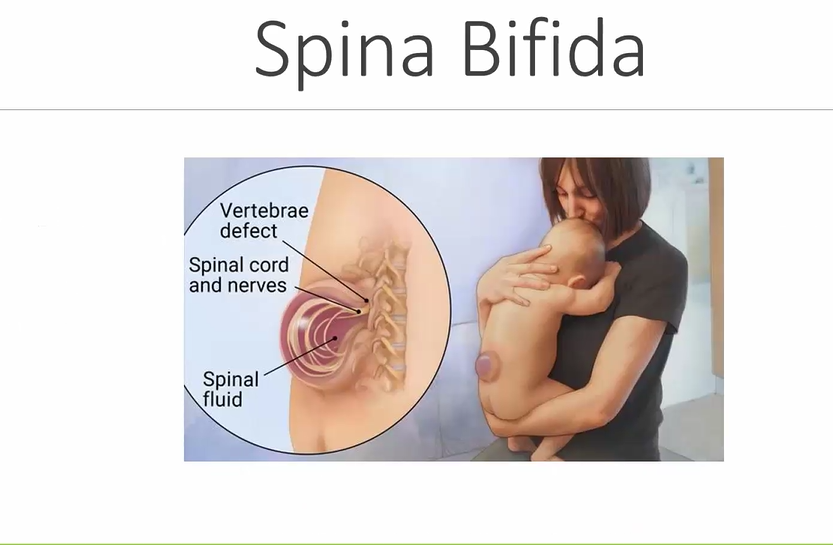
Breakout Session #8 Spina Bifida: Advancements in Treatment and Indications for Hippotherapy
Presented by: Carol Huegel, PT, HPCS & Jane Liddiard, BSc MOT
This presentation aims to provide a comprehensive and clinically relevant overview of Spina Bifida, with an emphasis on enhancing interdisciplinary understanding. Topics will include epidemiological data, etiological factors, and classification systems, along with a discussion of common complications associated with the condition. Anatomical and functional implications across various spinal cord levels will be reviewed, including corresponding myotomal and dermatomal involvement. Surgical management options will be outlined.
A review of current assessment tools and measures will be provided. Treatment incorporating hippotherapy will be discussed, including a review of contraindications and safety precautions. Real-life case examples will be illustrated through photos and videos to support clinical application and engagement.
-
 3/20/26
Breakout Session #9 Making Every Session Count: Practical Strategies for Therapists Using Hippotherapy Part-Time
Presented by: Gina Taylor, MS, OTR/L, HPCS
Many therapists incorporate hippotherapy into their practice only once or twice per week, often alongside other professional and personal responsibilities. This part-time involvement brings unique challenges such as making each session clinically impactful, managing clients and administrative demands efficiently, and balancing professional work with personal responsibilities. This presentation will focus on practical strategies in three areas: treatment, administrative, and lifestyle. Clinically, participants will learn how to maximize each session by layering equine movement with purposeful sensory input, maximizing movement value and integrating therapeutic activities to support client outcomes. Administratively, simple business tools for attracting, scheduling, and communicating with clients will be introduced, designed for therapists who operate at a smaller scale. Finally, lifestyle considerations will be discussed, offering ways to sustain long-term involvement in hippotherapy without having your own facility. This session emphasizes concrete, ready-to-use tools that participants can immediately integrate into their practice, ensuring that every session truly counts—for clients, therapists, and therapy horses alike.
-
 3/20/26
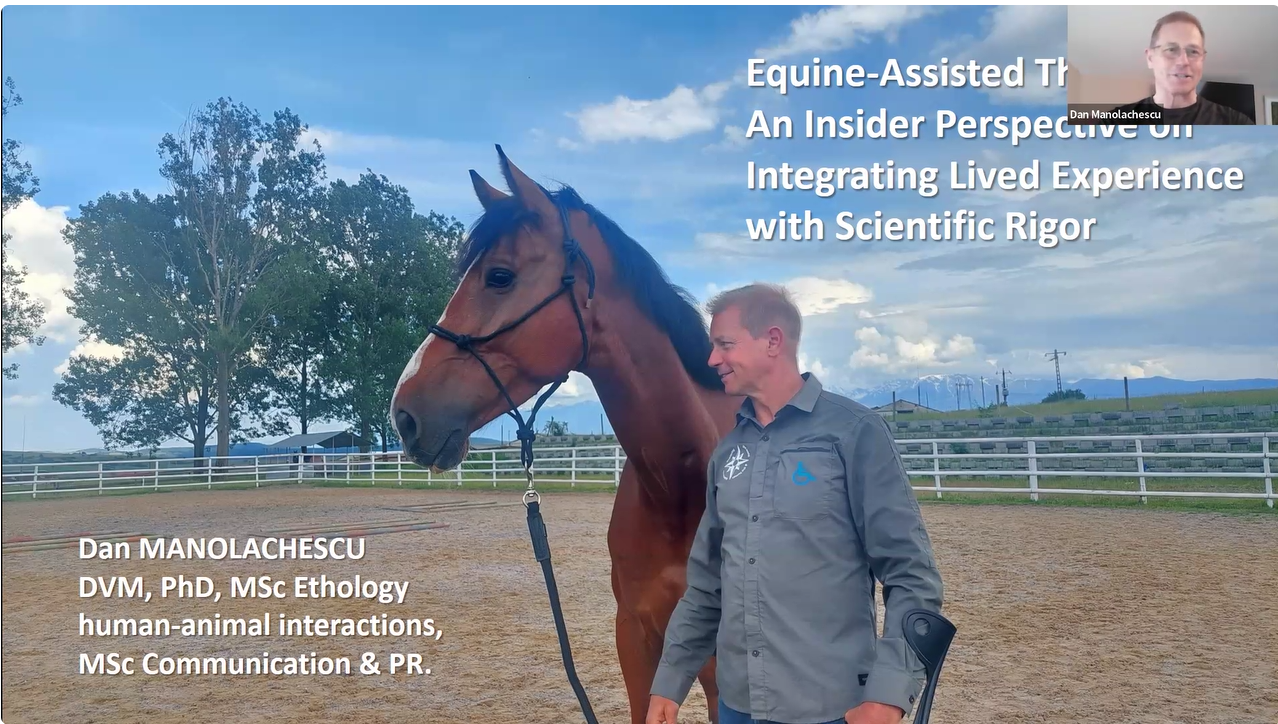
Keynote Session Equine-Assisted Therapy: An Insider Perspective on Integrating Lived Experience with Scientific Rigor
Presented by Dr. Dan Manolachescu
This presentation offers a powerful and thought-provoking journey into Equine-Assisted Services (EAS), told from a rare perspective: that of someone who has lived it from the inside—simultaneously as a horseman, a patient, and a researcher.
Before the accident, Dan was a professional rider and multisport athlete, deeply rooted in equestrian culture, performance, and the traditional values of competitive sport.
As a patient facing the dramatic consequences of a riding accident that resulted in tetraplegia, Dan shares a deeply human and motivational story of recovery, resilience, and adaptation—capturing the physical, emotional, and existential realities of long-term neurorehabilitation. In this context, Equine-Assisted Therapy appears not as a miraculous cure, but as a stabilizing, motivating, and profoundly meaningful force that sustained hope, engagement, and purpose during the most difficult phases of recovery.
Returning to the academic environment, Dan begins to look at therapy and recovery not only through the eyes of a patient, but also through the lens of a scientist. Moving beyond inspiration into critical analysis, this part of the presentation examines EAT through a rigorous scientific framework informed by lived experience. It openly addresses uncomfortable questions: the lack of standardized protocols, the fragility of existing evidence, and the high variability of real-world practice. At the same time, it highlights underexplored but scientifically relevant dimensions—motivation, emotional regulation, adherence, and identity reconstruction—as key variables that deserve systematic investigation.
-
 3/21/26
Breakout Session #10 Occupational Therapists' Perspectives on Using Hippotherapy for Mental Health Outcomes
Presented by: Marra Robert, OTD, OTRL
This study investigates the perspective of occupational therapists (OTs) who use hippotherapy as a treatment tool on the benefits it has on mental health outcomes among the clients they serve.
-
 3/21/26
Breakout Session #11 Raising the Bar: What You Need to Know About Certification, Credentialing, & the American Hippotherapy Certification Board Exams
Presented by: Meredith Bazaar, MA, CCC-SLP, HPCS & Shannon Middleton, MA, CCC-SLP, HPCS
This presentation will provide attendees with the information needed to obtain internationally recognized certification and credentialing for the use of hippotherapy as one of many therapy tools utilized by physical therapy, occupational therapy, and speech-language pathology professionals. Attendees will gain a greater understanding of The American Hippotherapy Certification Board (AHCB) and the AHCB Hippotherapy Certification and Hippotherapy Clinical Specialist® exams. This presentation will be an in-depth discussion of the benefits of certification and credentialing and a detailed review of the AHCB exams and processes. More specifically, the AHCB Certification and HPCS® exam details covered will include:Pre-requisites
Application procedures
Content areas assessed and preparation
Exam day experience
Renewal processes
Attendees of this presentation will obtain an extensive knowledge base about the benefits of certification and credentialing for themselves and how they can immediately begin the process (with AHCB and AHA, Inc.).
-
 3/21/26
Breakout Session #12 A Comparison of Equine-Assisted Services for People with Motor Speech Disorders
Presented by Beth Macauley, Associate Professor/ PhD, CCC-SLP, HPCS, FNAP, ACUE
The study begins by introducing Equine-Assisted Services (EAS), an umbrella term encompassing a variety of activities that utilize horses to provide therapeutic benefits. EAS includes both Equine-Assisted Interventions (EAI), such as physical and speech therapy conducted by credentialed professionals, and Equine-Assisted Activities (EAA), like therapeutic or adapted riding led by trained instructors.
Equine-Assisted Interventions (EAI) focus on specific therapeutic goals. For example, a speech-language pathologist may integrate horse movement into a session to facilitate speech motor control. Equine-Assisted Activities (EAA) typically center around improving quality of life through therapeutic riding sessions that provide secondary physical or cognitive benefits. This article specifically addresses the impact of three types of EAS: classic hippotherapy, therapeutic/adapted riding, and speech therapy incorporating hippotherapy.
-
 3/21/26
Breakout Session #14 AHA, Inc. Research Panel Highlighting the Utilization of Equine Movement (Hippotherapy)
Panelists: Matthew Mitchell, PT, DPT, HPCS, Irina Fedulow Plante, PT, DPT, NCS, Autumn Hayes-Diges, Ph.D., CCC-SLP, Heather Panczykowski, DHSc., OTR/L, FAOTA, & Marra Robert, OTD, OTRL
The utilization of equine movement (hippotherapy) continues to grow significantly worldwide; therefore, the research to support the integration of our equine partners in our clinical practices is of the utmost importance. The AHA, Inc. Research Subcommittee is excited to host the first-ever Research Panel highlighting current research trends in all disciplines (occupational and physical therapy and speech-language pathology) that will include a presentation, live discussion, and Q&A.
There are many research articles that do not properly represent the utilization of equine movement (hippotherapy) creating confusion and the potential for unsafe practices. The AHA, Inc. Research Panel will provide the foundation for discussing the importance of proper terminology, current research trends in all disciplines, how to apply the findings accurately and in a meaningful way and pave the way for future endeavors involving research. Research topics will include utilization of equine movement by physical and occupational therapists and speech language pathologists for various populations and recent trends.